
Select a landfill compactor from the waste stream, active-cell layout and approved compaction method. Match wheels, blade, debris protection and service access to the site, then evaluate useful coverage and compaction evidence with the landfill's qualified engineering team. Operate on representative waste using the approved layer and pass method. Measure coverage, delays and the site's agreed compaction indicators with documented waste and conditions. Inspect traction, wheel cleaning, cooling and service access, avoiding claims of universal achieved density from one short demonstration. Submit the intended configuration and any OEM/ODM changes for project-specific feasibility review.
Select a landfill compactor from the waste stream, active-cell layout and approved compaction method. Match wheels, blade, debris protection and service access to the site, then evaluate useful coverage and compaction evidence with the landfill's qualified engineering team.
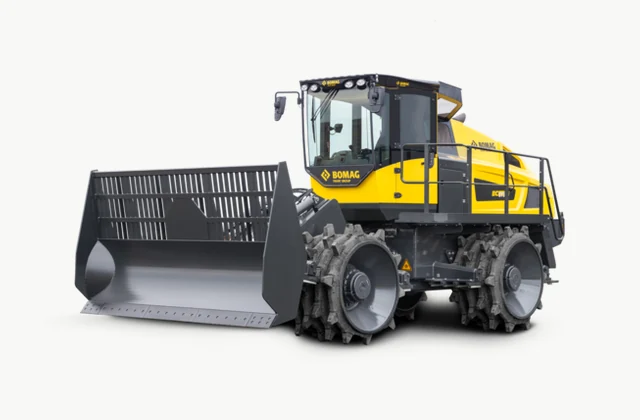
Shown as a configuration reference. Availability and the equipment offered for your project are confirmed separately.
Characterize the incoming waste
Provide waste composition, moisture, bulky items and the expected daily flow. Include materials the machine should not encounter and the site's sorting arrangements. A nominal operating weight cannot establish compaction performance across every mix of municipal, industrial or construction waste.
Define the cell and operating method
Supply active-cell dimensions, layer placement, travel distances and the approved pass strategy. Compaction results depend on the complete operating method. A machine demonstration in a prepared area does not establish achievable density or airspace use under a different waste-placement practice.
Match wheels and cleaning arrangements
Review wheel geometry, tips and scrapers for the intended waste and traction conditions. Confirm protection against wrapping and packed debris. Different wheel systems can change contact and maintenance behavior, so a similar-looking steel wheel should not be assumed to provide equivalent duty or service life.
Scope blade and debris protection
Specify spreading and pushing needs with the waste flow. Identify blade type, guards and protection of cooling, hydraulics and the underbody. A standard earthmoving configuration is not automatically a landfill package, even when the carrier has sufficient engine power and mass.
Assess stability visibility and fire response
Provide ground support, gradients and workface traffic with the site's risk assessment. Review operator visibility, access and the required fire-response provisions for the offered machine. Equipment features support the approved site plan but do not establish that every waste slope or debris condition is safe to operate.
Plan daily inspection and service
Waste can collect around wheel systems, cooling and protected components. Obtain cleaning and inspection instructions, safe access and identified wheel-tip or scraper parts. Destination support and maintenance resources matter because interrupted service can affect the active cell even when headline machine capacity is adequate.
Compare a complete landfill compactor scope
| Decision | Information to compare |
|---|---|
| Characterize the incoming waste | Waste composition, moisture, bulky items, exclusions and daily flow |
| Define the cell and operating method | Cell geometry, layer method, pass strategy and useful coverage |
| Match wheels and cleaning arrangements | Wheel/tip system, scrapers, wrapping exposure and wear components |
| Scope blade and debris protection | Blade duty, cooling/underbody guards and hydraulic/debris protection |
| Assess stability visibility and fire response | Ground/gradients, traffic, visibility, fire provisions and operator access |
| Plan daily inspection and service | Cleaning, wheel-tip/scraper parts, cooling inspection and service support |
Plan installation and access
Qualified landfill and equipment personnel should approve delivery, commissioning and working limits for the actual cell. Inspect guards, wheel systems, controls and emergency provisions. Establish traffic and maintenance areas, including safe isolation and cleaning arrangements for debris-laden equipment.
Agree acceptance evidence before ordering
Operate on representative waste using the approved layer and pass method. Measure coverage, delays and the site's agreed compaction indicators with documented waste and conditions. Inspect traction, wheel cleaning, cooling and service access, avoiding claims of universal achieved density from one short demonstration.
Define OEM/ODM engineering boundaries
OEM wheel packages, blades and protection arrangements may be reviewed within engineered limits. ODM mass, structure, wheels or drive changes need mechanical and landfill trials. Reference imagery does not establish stock, agency or a guaranteed compaction result for a different machine.
What should your landfill compactor RFQ include?
- Waste composition, moisture, bulky items, exclusions and daily flow
- Cell geometry, layer method, pass strategy and useful coverage
- Wheel/tip system, scrapers, wrapping exposure and wear components
- Blade duty, cooling/underbody guards and hydraulic/debris protection
- Ground/gradients, traffic, visibility, fire provisions and operator access
- Cleaning, wheel-tip/scraper parts, cooling inspection and service support
- Destination, working environment, access and delivery constraints
- Installation responsibility, utilities and connection drawings
- Acceptance samples, documented test method, operator training and maintenance scope
- OEM/ODM changes requested: identification, tooling, interfaces or new design; engineering feasibility to be confirmed
Need OEM / ODM customization?
Submit branding, packaging, configuration or engineering requirements for this equipment. Include the target market, initial and annual quantities, required changes and acceptance criteria.
Customization feasibility, permitted branding, development responsibilities, minimum quantity, cost and lead time are reviewed for the proposed supplier and configuration before a quotation is confirmed.
Frequently asked questions
How do I characterize the incoming waste?
Provide waste composition, moisture, bulky items and the expected daily flow. Include materials the machine should not encounter and the site's sorting arrangements. A nominal operating weight cannot establish compaction performance across every mix of municipal, industrial or construction waste.
How do I define the cell and operating method?
Supply active-cell dimensions, layer placement, travel distances and the approved pass strategy. Compaction results depend on the complete operating method. A machine demonstration in a prepared area does not establish achievable density or airspace use under a different waste-placement practice.
How do I match wheels and cleaning arrangements?
Review wheel geometry, tips and scrapers for the intended waste and traction conditions. Confirm protection against wrapping and packed debris. Different wheel systems can change contact and maintenance behavior, so a similar-looking steel wheel should not be assumed to provide equivalent duty or service life.
How do I scope blade and debris protection?
Specify spreading and pushing needs with the waste flow. Identify blade type, guards and protection of cooling, hydraulics and the underbody. A standard earthmoving configuration is not automatically a landfill package, even when the carrier has sufficient engine power and mass.
How do I assess stability visibility and fire response?
Provide ground support, gradients and workface traffic with the site's risk assessment. Review operator visibility, access and the required fire-response provisions for the offered machine. Equipment features support the approved site plan but do not establish that every waste slope or debris condition is safe to operate.
How do I plan daily inspection and service?
Waste can collect around wheel systems, cooling and protected components. Obtain cleaning and inspection instructions, safe access and identified wheel-tip or scraper parts. Destination support and maintenance resources matter because interrupted service can affect the active cell even when headline machine capacity is adequate.
Reference information
- BOMAG BC 573 RB-5 official product reference
- BOMAG landfill compactor official family or technical reference
Reference data and images explain equipment configurations. IndustryApex engineers confirm the offered model, specification and commercial scope in your project quotation.