
A flash steam recovery receiver separates and manages flash steam when hot condensate enters atmospheric or low-pressure collection. Choose vented receivers, recovery receivers with vent condensers, or integrated pump-trap units based on flash steam energy potential, backpressure tolerance, electrical safety requirements and the condensate pump architecture. Recovery depends on the flash steam quantity, available heat sink and the equipment needed to condense or reuse the vapor.
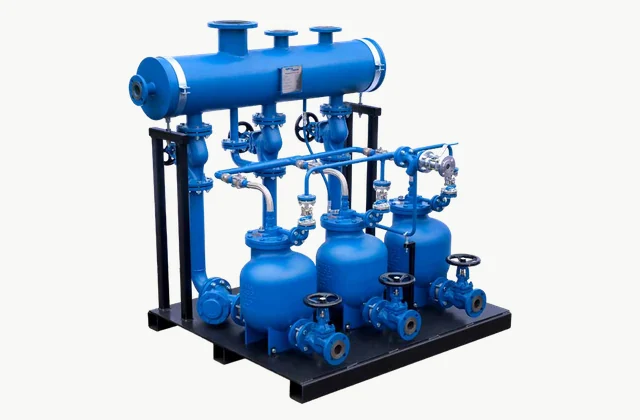
Shown as a configuration reference. Availability and the equipment offered for your project are confirmed separately.
Hot condensate releases flash steam when pressure drops during collection. The receiver configuration determines whether that vapor is vented, condensed for heat recovery or fed to a lower-pressure process. The decision depends on flash steam quantity, available recovery opportunities and the pumping method chosen for the condensate return stream.
When does flash steam recovery justify additional equipment?
Flash steam recovery makes sense when the vapor quantity, temperature and a nearby heat sink or process steam user align. Recovery requires a condenser, recovery vessel or direct connection to a lower-pressure steam header, plus the piping, controls and maintenance that accompany the additional components. Vent the flash steam when recovery equipment cost, space, complexity or the absence of a useful heat sink outweigh the energy value.
Estimate flash steam quantity from the condensate flow rate, upstream pressure and the receiver pressure. Higher upstream pressure and lower receiver pressure produce more flash steam. A constant high-temperature return stream from a single process offers simpler recovery than intermittent, mixed-temperature returns from scattered equipment.
What receiver configurations handle flash steam?
Three main configurations address flash steam during condensate collection. The choice depends on energy recovery value, electrical safety requirements and the selected pump type.
| Configuration | Flash steam handling | When to select | Pump compatibility |
|---|---|---|---|
| Vented receiver | Flash steam released to atmosphere through a vent | Low condensate temperature, small flash quantity, no heat sink or recovery too costly | Electric and pressure-powered pumps; vent sized for peak flash rate |
| Recovery receiver with vent condenser | Flash steam condensed in an external heat exchanger; surplus vented | Significant flash quantity, cooling water or process preheat available, justify condenser cost | Electric and pressure-powered pumps; requires condenser, cooling supply and condensate return |
| Integrated pump-trap unit | Flash steam separation and pumping combined; vapor vented or recovered within the unit | Compact installation, hazardous-area electrical restrictions, pressure-powered pumping preferred | Pressure-powered mechanism integral to receiver; no electrical supply required [S1] |
Vented receivers are the simplest arrangement. Flash steam escapes through a vent sized to prevent backpressure that would flood upstream steam traps or reduce condensate flow into the receiver. A lightweight chamber or diffuser may be fitted to reduce noise and disperse the plume safely.
Recovery receivers add a vent condenser—an external heat exchanger that uses cooling water or a process stream to condense the flash steam. The recovered condensate returns to the receiver or a separate collection point. This configuration requires a condenser, piping, a cooling-water supply and a means of handling the warmed cooling stream. Justify the additional equipment by calculating the annual energy value of the recovered flash steam against the installed cost, maintenance and pumping energy for the cooling circuit.
Integrated pump-trap units combine flash steam separation, condensate pumping and discharge in a single packaged assembly. Spirax Sarco describes these as ready-to-connect condensate pump stations operated by steam, compressed air or inert gas, with no electrical components, simple installation and suitability for hazardous areas [S1]. This configuration is appropriate when electrical safety, space or the preference for pressure-powered operation outweigh the need for separate recovery equipment.
What inputs define the flash steam receiver specification?
Provide the following data for each return stream to size the receiver, vent or recovery equipment and select the pump type:
- Condensate source, upstream pressure and temperature at the receiver inlet
- Condensate flow rate: average, peak and minimum over the production cycle
- Receiver operating pressure or backpressure limit imposed by upstream equipment
- Electrical supply availability and hazardous-area classification if applicable
- Discharge pressure and piping length to the boiler feedwater system or next collection point
- Heat sink availability: cooling-water flow, temperature, cost and the process stream to be preheated if recovery is considered
- Site constraints: footprint, headroom, access for maintenance and safe vent discharge location
Request the vendor to state the receiver volume, vent sizing basis, pump control method, flash steam handling arrangement and the evidence supporting the proposed configuration. Ask whether the quoted scope includes the vent condenser, cooling-water connections, controls and any pressure-reducing or flow-control valves needed to match the available motive supply for a pressure-powered pump.
How should recovery value and backpressure risk be compared?
Compare flash steam energy value, recovery equipment cost and the backpressure consequence before committing to a recovery configuration. Flash steam vented to atmosphere represents lost energy, but recovery equipment that is undersized, poorly maintained or incorrectly specified can create backpressure that floods steam traps, reduces condensate drainage and damages upstream heat transfer equipment.
For recovery with a vent condenser, confirm that the cooling-water supply is reliable, the condenser is sized for peak flash steam flow and that fouling or scaling will be managed through routine inspection and cleaning. Request the vendor to document the maximum allowable backpressure and the vent relief capacity that protects against condenser fouling or cooling-water interruption.
For integrated pump-trap units, confirm that the motive steam, compressed air or inert gas supply pressure and flow meet the unit’s requirements over the expected condensate load range. Ask the vendor to state the unit’s internal flash steam venting arrangement and whether any residual backpressure affects upstream trap selection or condensate drainage.
What acceptance evidence should be requested?
Demonstrate collection and transfer over the expected load range before final acceptance. Record receiver level behavior, discharge pressure, flash steam venting or recovery performance and the response to abnormal condensate quality or pump interruption. Observe whether the receiver maintains the agreed backpressure limit, whether the vent or recovery condenser handles peak flash steam flow without excessive noise or unsafe plume discharge and whether the pump delivers the required flow and pressure.
For recovery configurations, measure the cooling-water flow and temperature rise, calculate the recovered energy and compare it to the vendor’s estimate. For integrated pump-trap units, verify that the motive supply consumption, cycle time and discharge stability match the quoted performance. Request written confirmation that the installed configuration meets the specified backpressure, pumping and safety requirements.
Which maintenance and monitoring provisions are essential?
Inspect the receiver vent, level controls, pump internals, strainers and check valves on a schedule appropriate to the condensate quality and operating intensity. Track unexplained changes in makeup water consumption, which may indicate flash steam loss, pump failure or upstream steam trap problems. For recovery condensers, monitor cooling-water flow, fouling indicators and condensate return temperature to detect performance degradation early.
Agree the responsibility for routine inspection, spare parts supply and technical support during the quotation stage. Confirm which maintenance tasks can be performed by site personnel and which require specialist assistance. Keep configuration and inspection records with the equipment serial number so that later troubleshooting or capacity changes have accurate baseline data.
Review the complete condensate recovery package scope and configuration decisions in the Condensate recovery package equipment guide. For RFQ preparation and quotation comparison, consult the Condensate recovery package RFQ checklist. IndustryApex engineers assess return stream conditions, flash steam recovery feasibility and pumping architecture to develop an equipment solution for your project.
Define your equipment requirements
Review the Condensate recovery package buying guide for the complete equipment scope.
Discuss this equipment project ↗ · OEM requirements · ODM requirements. Configuration and feasibility are reviewed for your application.
Explore the Condensate recovery package buying guide and RFQ checklist ↗
Frequently asked questions
When should flash steam be vented rather than recovered?
Vent flash steam when the quantity is small, the condensate temperature is low, no suitable heat sink or process user is nearby, or recovery equipment cost and complexity outweigh the energy value. A vented receiver is simpler, requires less maintenance and avoids the risk of backpressure from a fouled or undersized condenser.
What defines the receiver backpressure limit?
The backpressure limit is set by the upstream steam traps and process equipment. Excessive backpressure floods traps, reduces condensate drainage and may damage heat transfer surfaces. Request the vendor to confirm the maximum receiver pressure, vent or recovery equipment relief capacity and the arrangement that protects against condenser fouling or cooling-water interruption.
How is flash steam recovery value calculated?
Calculate the flash steam quantity from condensate flow, upstream pressure and receiver pressure. Multiply the vapor mass flow by its latent heat to find the energy content. Compare this annual energy value against the installed cost of the condenser, piping, cooling-water supply, maintenance and any additional pumping energy. Recovery is justified when the payback period and reliability risk are acceptable.
Why choose an integrated pump-trap unit over a separate receiver and pump?
Integrated units combine flash steam separation and pumping in a compact package with no electrical components, suitable for hazardous areas and installations where space, electrical supply or the preference for pressure-powered operation favor a single assembly. Separate receivers with electric pumps offer independent control, easier access for maintenance and greater flexibility for future capacity changes.
What should the flash steam receiver acceptance test demonstrate?
Demonstrate collection and transfer over the expected load range. Record receiver level behavior, discharge pressure, flash steam venting or recovery performance and response to abnormal condensate quality or pump interruption. For recovery configurations, measure cooling-water flow, temperature rise and confirm the recovered energy matches the vendor estimate. Request written confirmation of backpressure, pumping and safety compliance.
What maintenance distinguishes vented, recovery and integrated receiver configurations?
Vented receivers require vent inspection, level control checks and pump servicing. Recovery configurations add condenser fouling inspection, cooling-water filter maintenance and condensate return monitoring. Integrated pump-trap units need motive supply pressure verification, internal mechanism inspection and discharge check-valve service. Agree maintenance responsibility, spare parts supply and technical support during procurement.
Reference information
- Automatische Kondensat-Flüssigkeitspumpen | Schweiz | Spirax Sarco
Reference data and images explain equipment configurations. IndustryApex engineers confirm the offered model, specification and commercial scope in your project quotation.