
Existing radiators can work with air to water heat pumps when assessed against the proposed supply temperatures and building heat demand. Request emitter output calculations at the heat pump's intended delivery temperature, verify system flow rates and check whether the radiators meet design-day heating requirements. Oversized or low-temperature radiators are more likely to remain suitable without replacement.
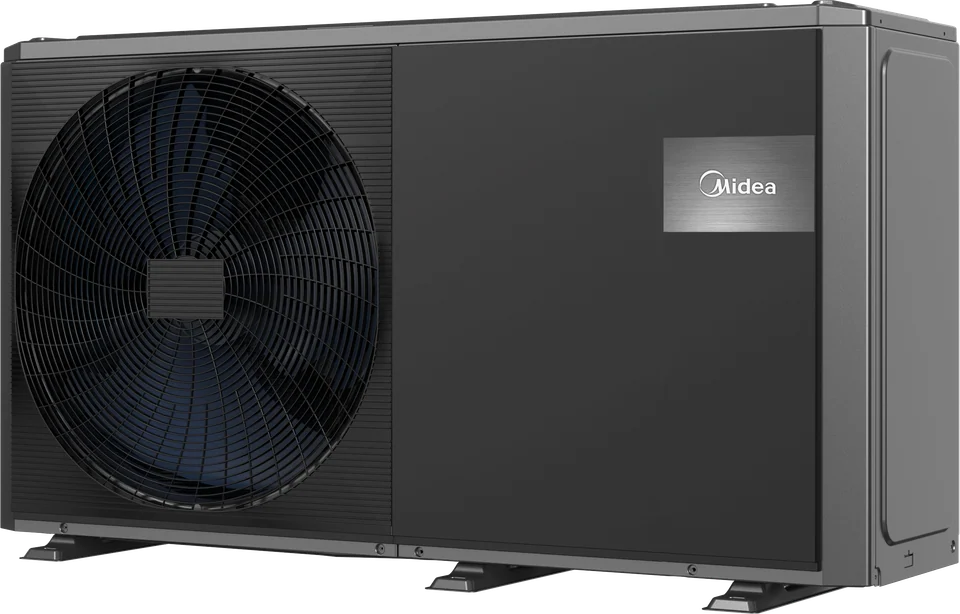
Shown as a configuration reference. Availability and the equipment offered for your project are confirmed separately.
Air to water heat pump radiator compatibility depends on whether existing emitters deliver sufficient heat at the lower water temperatures most heat pumps use for efficient operation. A traditional boiler may have supplied higher-temperature water, while a heat pump typically operates at lower temperatures for best efficiency. The question is whether the installed radiators can transfer enough heat at these reduced temperatures to maintain comfort on the coldest design day.
When do existing radiators work without changes?
Radiators originally sized with margin, installed in well-insulated buildings or serving rooms with moderate loads often remain adequate. A larger surface area compensates for lower water temperature. If the building heat-demand assessment shows that radiator output at the proposed heat pump delivery temperature meets or exceeds the calculated room load, no emitter changes are required. Conversely, radiators sized tightly for high-temperature operation or serving poorly insulated spaces may fall short and need supplementing or replacement.
The Midea R290 M thermal Arctic HT series can deliver water temperatures up to 75°C at –10°C ambient temperature [S1], which extends compatibility to more existing emitter installations. However, running a heat pump at maximum temperature reduces efficiency and increases operating cost. A qualified designer should compare the energy and cost implications of upgrading insulation or radiators against accepting higher delivery temperatures year-round.
Required radiator compatibility assessment inputs
Request the following data and calculations from the system designer to determine whether existing radiators remain suitable:
| Assessment input | Why it matters | How to obtain it |
|---|---|---|
| Building heat-demand assessment | Establishes the required heat output for each room at local design outdoor conditions | Commission a heat-loss calculation to relevant standard for the building location and fabric |
| Existing radiator inventory | Identifies radiator type, dimensions and nominal output ratings | Measure and photograph each radiator; collect manufacturer datasheets where available |
| Proposed heat pump supply temperature | Determines actual emitter output, which falls as water temperature drops | Request the designer’s chosen flow and return temperatures at design conditions |
| Emitter output at proposed temperature | Confirms whether each radiator meets the room’s calculated heat demand | Apply radiator correction factors or request recalculated outputs from the designer |
| System flow rate and pressure drop | Ensures the heat pump circulator and pipework can deliver the required water volume | Designer hydraulic calculation, including existing pipe sizes and routing |
Radiator replacement and upgrade boundaries
Where existing radiators prove undersized, options include replacing them with larger or low-temperature models, adding supplementary panel radiators or fan-assisted convectors in critical rooms, improving building insulation to reduce demand, or accepting a higher heat pump delivery temperature with the associated efficiency penalty. Each choice has cost, space and energy trade-offs.
Low-temperature radiators with extended surface area or integrated fans can deliver the same heat output at lower flow temperatures that a standard radiator needs higher temperatures to achieve. These are particularly useful in bathrooms or other rooms where wall space is limited. Record which rooms require intervention and include radiator supply, removal and installation as separate quotation lines so the complete project cost remains visible.
System integration and control considerations
The Midea R290 M thermal Arctic HT series uses an all DC inverter system design covering compressor, fan motor and pump [S1], which supports modulation to match building load and maintain stable delivery temperatures. Effective radiator compatibility also depends on correct system balancing, thermostatic radiator valves or zone controls, and any buffer vessel the designer specifies to protect minimum flow or cycling limits.
Ask the designer to confirm whether the existing distribution pipework, circulating pump and expansion vessel remain suitable or need upgrading. Undersized pipes or an inadequate pump will throttle flow and prevent radiators from reaching their calculated output even when sized correctly on paper. Include these items in the hydraulic review and project budget.
Acceptance evidence and commissioning checks
Agree commissioning tests that verify flow temperatures, return temperatures, flow rates and room temperatures under representative load conditions. Record the heat pump operating mode, outdoor temperature, each room’s setpoint and achieved temperature, and any rooms that fall short. A brief warm-up demonstration does not establish performance on the coldest design day; schedule a cold-weather verification or retain a monitoring period with clear response responsibilities if comfort targets are missed.
Document any agreed compromises, such as a reduced setpoint in a rarely used room or supplementary heating in a single high-load space, so expectations remain aligned. Retain the designer’s calculations, commissioning records and any emitter changes as part of the system handover.
IndustryApex equipment and integration scope
IndustryApex engineers can assess your building heat demand, existing radiator inventory and proposed heat pump configuration to recommend whether emitters should be retained, supplemented or replaced. Request a complete project quotation covering the air source heat pump, controls, hydraulic integration, any radiator changes, commissioning and warranty terms. Review the air source heat pump RFQ checklist for the complete scope inputs. Configuration advice and the final equipment scope are confirmed for your specific application and destination.
Define your equipment requirements
Review the Air source heat pump buying guide for the complete equipment scope.
Discuss this equipment project ↗ · OEM requirements · ODM requirements. Configuration and feasibility are reviewed for your application.
Explore the Air source heat pump buying guide and RFQ checklist ↗
Frequently asked questions
Can I assess radiator compatibility from the heat pump's maximum water temperature alone?
No. Maximum temperature is an equipment limit, not an operating recommendation. Request emitter output calculations at the designer's proposed flow temperature, compare that output to the room heat demand, and assess the efficiency and running-cost implications of different temperature choices.
Do all radiators need replacement when installing an air to water heat pump?
Not necessarily. Radiators originally oversized, serving well-insulated rooms or operating in mild climates may remain adequate at lower supply temperatures. Commission a room-by-room heat-loss calculation and emitter output assessment to identify which radiators, if any, need upgrading.
What information does the designer need to confirm radiator compatibility?
Provide the building location and design outdoor temperature, a heat-loss calculation, an inventory of existing radiators with type and dimensions, the proposed heat pump supply and return temperatures, and details of the distribution pipework and controls. The designer uses these inputs to calculate emitter output and system flow requirements.
Should I request low-temperature radiators or accept higher heat pump delivery temperatures?
Compare the cost of upgrading radiators against the ongoing energy penalty of higher delivery temperatures. Low-temperature radiators reduce running costs and improve seasonal efficiency; higher temperatures preserve existing emitters but increase electricity consumption. Request a lifecycle cost comparison for your specific building and tariff.
What system changes beyond radiators might be needed for heat pump compatibility?
The designer may specify a larger circulating pump, upgraded pipework to reduce pressure drop, thermostatic or zone controls, a buffer vessel, or an expansion vessel sized for the heat pump system volume. Include these items in the hydraulic review and project quotation.
How is radiator compatibility verified after installation?
Agree commissioning checks that record flow and return temperatures, system flow rate, and room temperatures under representative load. Schedule a cold-weather verification or monitoring period to confirm design-day performance. Retain the designer's calculations and commissioning records as handover documentation.
Reference information
- R290 M thermal Arctic HT Series
- R290 M thermal Arctic HT Series
Reference data and images explain equipment configurations. IndustryApex engineers confirm the offered model, specification and commercial scope in your project quotation.